

Do Probiotics Help With Acid Reflux? A Doctor’s Guide to Cooling the Burn in 2026
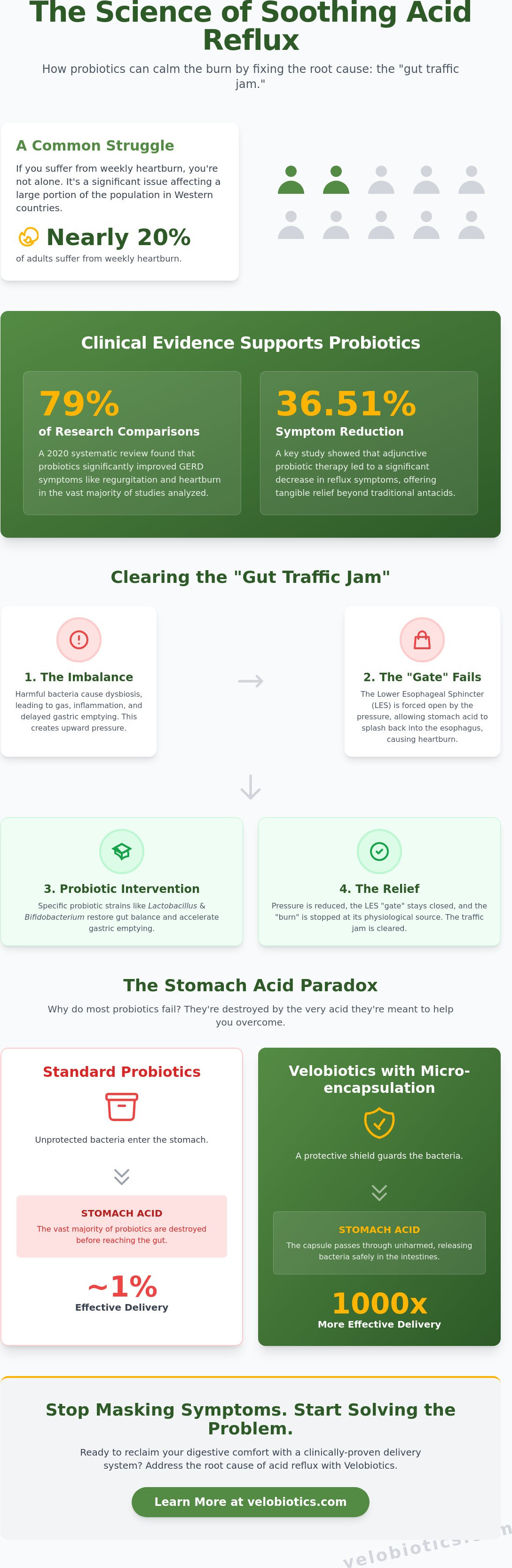
What if the chalky antacids you are popping are just masking a massive "gut traffic jam" that could be cleared with the right microbes? If you have ever spent a night propped up on pillows wondering do probiotics help with acid reflux, you are not alone. While nearly 20 percent of adults in Western countries suffer from weekly heartburn, most are unaware that a January 2026 study showed adjunctive probiotic therapy can reduce reflux symptoms by 36.51 percent. However, there is a catch. Most probiotics are destroyed by the very stomach acid they are meant to soothe before they ever reach their destination.
I understand the frustration of feeling dependent on PPIs or fearing every social dinner. You deserve a solution rooted in clinical evidence rather than vague promises. In this guide, I will explain how specific strains like Lactobacillus acidophilus LA14 strengthen your gut barrier and why our Velobiotics technology ensures these bacteria reach your gut alive. We will look at the science of micro-encapsulation and how 1000x more delivery can finally help you stop the burn and reclaim your digestion.
Key Takeaways
- Understand the biological link between your microbiome and the lower esophageal sphincter to stop the "burn" at its physiological source.
- Discover the clinical evidence behind how do probiotics help with acid reflux, including why 79% of research comparisons show improved symptoms.
- Learn why the "CFU count" on most labels is a myth and how micro-encapsulation technology ensures your supplements actually reach your gut alive.
- Identify the specific "Big Three" bacterial strains that improve gastric emptying and reduce the fermentation that causes painful chest pressure.
- Master the "Doctor’s Protocol" for supplement timing and lifestyle shifts to ensure your probiotics deliver 1000x more effectiveness for long-term relief.
Understanding the "Burn": Why Your Gut Flora Matters for Acid Reflux
Think of your Lower Esophageal Sphincter (LES) as a high-tech security gate. This ring of muscle sits at the bottom of your throat; its only job is to let food in and keep stomach acid out. When it malfunctions, you feel that familiar, searing heat. While many gastroenterologists suggest this is purely a mechanical failure, we now know the gut microbiome plays a massive role in how that gate behaves. The "Gut-Esophagus Axis" is a biological communication line where your gut flora influences the tension of that muscle. If the signals are wrong, the gate stays open.
If you're asking do probiotics help with acid reflux, you have to look past the immediate burn. Traditional antacids are essentially chemical band-aids. They neutralize the acid currently in your stomach but do nothing to address why the "gate" opened in the first place. Often, the culprit is dysbiosis. This is an imbalance where harmful bacteria produce excess gas and inflammatory markers that irritate the esophageal lining. To understand the solution, it helps to revisit what probiotics are: live microorganisms that, when delivered in the right quantities, restore balance and reduce the systemic inflammation that weakens your digestive valves. When the microbiome is in harmony, the LES stays tight, and the burn stays away.
Acid Reflux vs. GERD: When should you worry?
Occasional heartburn after a spicy pizza is normal. However, when it happens more than twice a week, we classify it as Gastroesophageal Reflux Disease (GERD). This chronic condition affects roughly 20% of the population and can lead to esophageal damage if ignored. You should seek immediate medical attention if you experience "red flag" symptoms like unintended weight loss, difficulty swallowing, or persistent vomiting. Probiotics aren't a replacement for emergency care; they are a vital preventative tool for maintaining long-term esophageal comfort and preventing the progression of occasional reflux into chronic disease.
The "Traffic Jam" Theory of Heartburn
Imagine a highway where the exit is blocked. That is "delayed gastric emptying." When food sits in your stomach for too long, it begins to ferment. This process creates upward pressure that physically forces your LES gate open. A healthy microbiome acts like a traffic controller, ensuring food moves efficiently into the small intestine. By using a high-quality supplement like our 16 Strains Probiotics, you help clear the jam and reduce the pressure that causes acid to back up. This isn't just theory. Clinical data shows that improving gut motility directly correlates with fewer reflux episodes, provided the bacteria reach your gut alive to do their job.
The Science of Soothing: How Probiotics Improve Gastric Emptying
When I review the clinical literature as a physician, the data is quite compelling. A 2020 systematic review analyzed 13 prospective studies and found that in 79% of comparisons, probiotics significantly improved GERD symptoms like regurgitation and heartburn. This isn't magic; it's mechanics. If you've been wondering do probiotics help with acid reflux, the answer lies in how these microbes reduce stomach fermentation. When your gut is out of balance, "bad" bacteria ferment undigested food, releasing gases that create intense upward pressure against your lower esophageal sphincter. By introducing specific Lactobacillus and Bifidobacterium strains, you crowd out these gas-producers and lower that physical pressure.
Probiotics accelerate gastric emptying by stimulating the enteric nervous system to move food quickly into the small intestine, which prevents the biological backlog that triggers reflux. This "clearing of the highway" means acid has less time to sit and splash back into your throat. However, the effectiveness of this process depends entirely on the bacteria's survival. If the strains don't reach your gut alive, they can't signal your muscles to move. This is why we focus on clinical-grade delivery systems that protect these delicate organisms from the harsh environment of the stomach.
The H. Pylori Connection
Many patients don't realize that Helicobacter pylori is often the hidden villain of stomach acid issues. This bacterium can burrow into the stomach lining, causing inflammation and disrupting normal acid production. Probiotics act as "gut reinforcements" by competing with H. pylori for space and nutrients; they essentially make your stomach a hostile environment for this pathogen. For a deeper dive into how we fight this specific battle, you can read my guide on Probiotics for H. Pylori.
Reducing Inflammation in the Esophagus
Think of probiotics as tiny firefighters for your mucosal lining. Beneficial bacteria produce short-chain fatty acids (SCFAs), such as butyrate, which serve as the primary fuel for gut repair. These SCFAs help strengthen the esophageal barrier and reduce the sensitivity of pain receptors in your chest. When your microbiome is balanced, your body's inflammatory response is more controlled, leading to less tissue damage from occasional acid exposure. If you want to support this repair process, our 16 Strains Probiotics provide the diversity needed to keep those protective systems functioning at peak capacity.
The Stomach Acid Paradox: Why Most Probiotics Fail Before They Start
We face a fundamental biological contradiction when treating digestive distress. If you're asking do probiotics help with acid reflux, you must first understand that the human stomach is designed to be a sterilization chamber. Its pH level typically ranges from 1.5 to 3.5; this is acidic enough to dissolve certain metals. While this environment is vital for breaking down protein and killing pathogens, it creates an "Acid Trip" that is lethal for most beneficial bacteria. When you swallow a standard, unprotected probiotic, you're essentially sending a rescue team into a furnace without any heat shields.
This leads us to what I call the "Probiotic Gap." You might see "50 Billion CFU" printed on a supplement label, but that number represents the count at the time of manufacture, not at the time it reaches your gut. Clinical research indicates that as much as 99 percent of unprotected probiotic bacteria are destroyed within 30 minutes of contact with gastric acid. This means the expensive supplement you paid for is largely neutralized before it can begin to move food through your system or soothe your esophagus. It's a massive waste of resources and a major reason why many people don't see results.
Micro-encapsulation: The Velobiotics™ Secret
To solve this paradox, we developed a "suit of armor" for our bacteria using a patented micro-encapsulation process. Think of it as a microscopic, acid-resistant bubble that shields the microbes until they safely reach the alkaline environment of your intestines. Our Velobiotics technology ensures probiotics that survive stomach acid reach their destination with 1000x more delivery than standard capsules. This survival is the only way to ensure the bacteria actually influence the "gut traffic jam" we discussed earlier.
Why Yogurt Isn’t Enough for Chronic Reflux
Many patients tell me they eat yogurt to manage their burn, but this is rarely effective for chronic reflux. Most commercial yogurts are loaded with sugar, which can actually feed the gas-producing bacteria that cause upward pressure on your LES. Additionally, the concentration of active cultures in dairy is far too low for therapeutic use. To get the same clinical dose found in one capsule of our 16 Strains Probiotics, you'd need to consume dozens of servings of yogurt daily. For real relief, you need targeted, multi-strain therapy that is built to survive the journey.
Choosing the Right Strains and the "Doctor’s Protocol" for Relief
Not all bacteria are suited for the job of cooling the burn. When patients ask do probiotics help with acid reflux, I explain that success depends on selecting the right clinical specialists. A generic "gut health" supplement won't cut it if it lacks the specific strains studied for upper GI motility and esophageal protection. We're looking for microbes that don't just sit there; we need them to actively manage the environment of your stomach and lower esophagus.
The "Big Three" strains I recommend are Lactobacillus acidophilus, Lactobacillus reuteri, and Bifidobacterium bifidum. L. reuteri is particularly effective at reducing the fermentation that leads to upward pressure, while B. bifidum supports the lower GI tract to ensure the traffic jam doesn't back up into the stomach. Utilizing a broad spectrum of 16 different strains creates a resilient ecosystem that can withstand lifestyle stressors and maintain consistent esophageal comfort. This diversity ensures that if one strain is temporarily suppressed, others are available to maintain the gut barrier.
Regarding timing, I'm often asked if supplements should be taken on an empty stomach. While traditional probiotics are extremely sensitive to timing, our micro-encapsulated technology allows for more flexibility. However, I still recommend taking them 20 to 30 minutes before your first meal to prime the digestive tract. When reading a label, ignore the marketing fluff and look for three things: specific strain codes, a guarantee of shelf stability, and a verified delivery technology like Velobiotics™. Without these, you're likely just buying expensive, dead bacteria.
The 30-Day Gut Reset Protocol
Consistency is far more important than taking a massive one-time dose. During Week 1 and 2, you're in the adjustment phase. You might feel a bit of minor gas or bloating; don't stop. This is the bacteria redecorating your gut and shifting the pH balance. By Week 3 and 4, most patients notice a statistically significant drop in reflux frequency and better post-meal comfort. Your goal isn't a quick fix but a permanent change in how your body handles food.
Practical Diet Tips to Support Your Probiotics
Your new microbes need a hospitable home to survive and flourish. A low-acid companion diet, focusing on melons, oatmeal, and green vegetables, prevents irritation while the probiotics do their heavy lifting. Remember that fiber is the essential fuel, or prebiotic, that allows your new residents to colonize effectively. To get the comprehensive support your system needs, I recommend starting with our Velo16 Probiotic Digestive Capsules to ensure maximum strain survival.
Beyond the Capsule: A Holistic Approach to Digestive Comfort
While I am a firm believer in the power of clinical-grade supplements, I always tell my patients that probiotics are a precision tool, not a magic pill that can erase every poor lifestyle choice. If you're still asking do probiotics help with acid reflux, remember that their efficacy is amplified when you respect your body's natural rhythms. For instance, eating a heavy, acidic meal less than three hours before lying down creates a physical challenge that even the strongest microbiome cannot fully overcome. Gravity is a powerful force. When you lie flat too soon after eating, you lose the natural downward pull that keeps gastric contents in place.
I also recommend paying attention to your sleep posture. Clinical observations suggest that sleeping on your left side can significantly reduce reflux episodes. This is due to the anatomical curve of the stomach. When you're on your left, the stomach sits below the esophagus, making it much harder for acid to travel upward. Pair these mechanical adjustments with a consistent probiotic regimen to create a comprehensive defense against the burn. Taking control of your gut health is about building a lifestyle where your microbiome can flourish and protect you for a burn-free future.
Stress and the Microbiome
There is a profound gut-brain connection that most people ignore. When you are in "fight or flight" mode, your body prioritizes survival over digestion, effectively slowing the movement of food through your GI tract. This stagnation leads to the "traffic jam" we discussed earlier, increasing the likelihood of reflux. A happy mind truly does lead to a happy stomach. To combat this, I suggest a simple, 5-minute pre-meal breathing exercise. By inhaling for four counts and exhaling for six, you signal your nervous system to enter a "rest and digest" state, allowing your gut flora to do their work without interference.
Making the Right Choice for Your Gut
Ultimately, the "game changer" for managing reflux in 2026 is survival. As we've explored, the "Probiotic Gap" is real, and 99 percent of standard supplements simply don't make it to the gut alive. If you want to see a 36.51 percent reduction in symptoms as seen in recent clinical trials, you need a delivery system that guarantees potency. I invite you to explore Velobiotics™ Science and our Velo16 range to see how our micro-encapsulation technology provides 1000x more delivery than the competition. For more information on navigating the supplement aisle, check out my Best Probiotic Supplement Guide to ensure you are getting a product that actually works.
Reclaim Your Chest Comfort and Digestive Vitality
The journey to a burn-free life starts by moving beyond temporary fixes. We have established that while 79 percent of studies support the use of beneficial bacteria for GERD, the real question isn't just do probiotics help with acid reflux, but rather how many of those bacteria actually reach your gut alive. By choosing a 16-strain clinical strength formula, you provide your system with the diversity needed to clear gastric traffic jams and strengthen your esophageal barrier against future irritation.
I formulated our products to solve the survival problem that other brands ignore. Our patented Velobiotics™ technology ensures 1000x more delivery by shielding delicate microbes from harsh gastric acid with a clinical-grade suit of armor. You don't have to live in fear of your favorite foods or wake up with a burning throat. It's time to transition from reactive antacids to proactive microbiome care that addresses the root cause of your discomfort.
Stop the burn and start healing with Velo16 Micro-encapsulated Probiotics. You have the power to transform your digestive health; I am here to provide the medical-grade tools to make it happen. Here is to your long-term comfort and vitality.
Expert Answers for Cooling the Burn
Can probiotics make acid reflux worse initially?
Yes, it's common to experience a temporary increase in gas or bloating during the first 7 to 14 days of treatment. This occurs because the new, beneficial bacteria are actively shifting the pH balance of your gut and displacing older colonies. This "microbiome redecoration" can create minor upward pressure against your lower esophageal sphincter. These symptoms typically subside within two weeks as your digestive system stabilizes and begins to move food more efficiently.
How long does it take for probiotics to help with heartburn?
Most patients notice a significant shift in their digestion around day 21, though full clinical benefits often peak at the 12-week mark. A study published in January 2026 demonstrated that consistent use led to a 36.51 percent reduction in reflux scores over three months. While you might feel less "heavy" after meals within the first week, your gut lining and valve function require a full 30-day cycle to show measurable improvement.
Are there specific probiotic strains I should avoid for GERD?
You should generally avoid supplements that contain high amounts of prebiotic fillers like FOS (fructooligosaccharides) if you are prone to severe bloating. While prebiotics are "food" for bacteria, they can ferment too quickly in some individuals, creating the very gas pressure we are trying to stop. Focus instead on clean, multi-strain formulas that prioritize Lactobacillus and Bifidobacterium species without unnecessary sugars or bulk fillers that trigger fermentation.
Can I take probiotics while on PPIs like Omeprazole?
Taking probiotics while using proton pump inhibitors is highly recommended by many physicians. PPIs work by suppressing stomach acid, which can unfortunately allow "bad" bacteria to overgrow in the small intestine. When patients ask do probiotics help with acid reflux while on medication, I explain that these supplements act as gut reinforcements. They help maintain a healthy microbial balance and prevent the common side effects of long-term PPI use, such as dysbiosis or SIBO.
Do probiotics help with LPR (Silent Reflux)?
Probiotics are effective for LPR because they address the underlying gastric motility issues that cause pepsin and acid to reach the throat. Silent reflux is often a result of aerosolized stomach contents forced upward by internal pressure. By ensuring that food moves "south" into the intestines at a normal rate, probiotics reduce the biological backlog. This prevents the misting of enzymes that irritates the larynx and causes that persistent "lump in the throat" feeling.
What happens if I stop taking probiotics for my reflux?
Your gut microbiome will likely return to its original state within 14 to 28 days after you stop supplementation. Most probiotic strains are transient visitors; they do their work while passing through or temporarily colonizing. If you haven't made significant dietary changes to support your native flora, the gas-producing bacteria may return. Consistency is the key to keeping the "gut traffic jam" clear and maintaining the tension of your esophageal valve.
Can children take probiotics for acid reflux?
Children can certainly benefit from probiotics, especially since their digestive systems are still developing. Pediatric reflux is often linked to an immature microbiome or slow gastric emptying. Using a child-specific formula, like our BioKid chewable tablets, can help stabilize their gut environment safely. I always advise parents to consult with their pediatrician first, especially for children under age two, to ensure the dosage is tailored to their specific needs.
Is it better to get probiotics from food or supplements for reflux?
Supplements are significantly more effective for reflux because of dose-dependency and survival technology. While kimchi and yogurt are healthy, they often lack the "suit of armor" needed to survive a highly acidic stomach. Furthermore, you would need to consume roughly 25 servings of traditional yogurt to match the CFU count found in one clinical-grade capsule. A micro-encapsulated supplement ensures 1000x more delivery of live, active strains directly to the source of the problem.

Disclaimer
Information and statements regarding dietary supplements/products have not been evaluated by the Food and Drug Administration, MCC/SAHPRA, MHRA, TGA or any other drug regulatory authority and are not intended to diagnose, treat, cure, or prevent any disease. Information on this website is provided for informational purposes only and is a result of years of practice and experience by the author. This information is not intended as a substitute for the advice provided by your physician or other healthcare professional or any information contained on or in any product label or packaging. Do not use the information on this website for diagnosing or treating a health problem or disease, or prescribing medication or other treatment. Always speak with your physician or other healthcare professional before taking any medication or nutritional, herbal, or homeopathic supplement, or using any treatment for a health problem. If you have or suspect that you have a medical problem, contact your healthcare provider promptly. Do not disregard professional medical advice or delay in seeking professional advice because of something you have read on this website.